Music is conventionally defined as structured sound – a system of auditory vibrations organized into tone, rhythm, and melody. Yet the adjective musical can be applied to inanimate and artifactual objects that do not emit noise or sound. This ambiguity raises a central question for architectural theory and practice: what is it that makes an architectural object musical? And how can architectural design become more authentically sonorous and musical in character?
As a post-professional student, I plan to develop a research project titled Sound Architecture, which explores architectural form from a sonic perspective, and sonic form from an architectural perspective. Building on my architectural training, an open elective curriculum is the primary reason I am drawn to post-professional study. An open curriculum would allow me to study sound and music not only from an acoustic standpoint – an area in which I have some experience through my work at Gehry Partners – but from a broader architectural perspective.
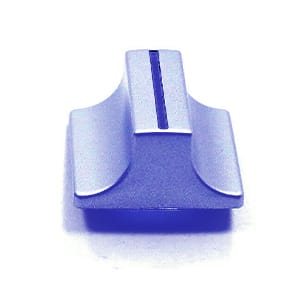
Through interdisciplinary coursework, I would look forward to studying small-scale auditory objects in a music department or sound and fabrication lab – such as instruments, synthesizers, and high-fidelity speakers – with an eye towards designing spaces that resonate sonically. At the same time, within a school of architecture, I hope to question conventional tectonics, and studying alongside faculty who are rethinking how buildings are made, I would direct my attention to the sonic and musical qualities of sculpture, form, furniture, and facades. The ultimate goal of this research into Sound Architecture would be to facilitate the design of musical objects and spaces, to construct private and public places with an orientation towards the emission and transmission of sound.
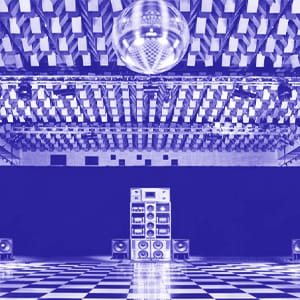
Before addressing architectural form, I want to better understand the sonic manipulation of space in general: sound design, acoustic engineering, and the potential to use sound as an architectural design tool. Ragnar Kjartansson’s installation The Visitors provides a compelling example of manipulating acoustics to build invisible walls or sonic spaces within a single black-box theater. As a post-professional student, I would be very eager to explore if and how other architects have thought of sound before visualizing space.
During my graduate research, these musical studies will inevitably extend to the largest and most familiar scale: Architecture. At that point, I hope to shed light on questions such as: how do we hear something visually and how can sound construct spaces physically? My post-professional thesis would aim to deconstruct those questions and hopefully build a strong argument for Sound Architecture – a tectonic shift away from the ocular-centric pattern in contemporary architecture.
Thank you for your time and consideration.